One of our team will be in touch with you shortly, in the mean time why not register an account with Orbit Spaces to access our spaces now.
 "
/>
"
/>
Around 1.1 million UK workers left their jobs in the past year because of a lack of flexible working, according to the CIPD’s most recent research. That figure tells us something important about where the modern workplace is heading. Flexibility is no longer a perk, it is a baseline expectation, and businesses that fail to offer it risk losing good people to competitors who do.
For startups, freelancers and growing businesses, getting flexible working right can be the difference between attracting top talent and watching them go elsewhere. It can also shape your culture, your productivity, your bottom line and the kind of flexible workspace your team needs to do their best work. In this guide we look at the who, what, where, why and how of flexible working, with practical advice on adopting it in your own business.
Flexible working covers any arrangement that gives employees more choice over when, where or how they work. That can mean hybrid schedules, flexi-time, compressed hours, job sharing, part-time hours, remote working or staggered start and finish times. The 2023 Employment Relations (Flexible Working) Act gave employees the right to request flexible working from their first day in a new role, which has pushed many businesses to rethink their policies.
The benefits of flexible working stretch across two clear groups: the people doing the work, and the businesses they work for. Here is a summary of the main advantages on both sides.

Flexible working is often described as a perk for parents, but the reality is much broader. Parents and carers are an obvious group, with a recent survey finding that while 98% of mothers want to return to work after maternity leave, only 13% see it as viable on a full-time basis. Flexibility opens that door, allowing them to combine paid work with caring responsibilities rather than choosing between the two.
People with long-term health conditions or disabilities also benefit significantly. A University of Lancaster study found that 70% of disabled workers said being unable to work remotely would negatively affect their health. Flexible arrangements can mean the difference between someone staying in employment and dropping out of the workforce altogether.
Older workers are another group who gain a great deal. With longer working lives now the norm, many people approaching retirement want to scale back gradually rather than stop overnight. Flexible hours, part-time roles or compressed weeks allow experienced staff to stay engaged, pass on knowledge to younger colleagues and continue contributing on their own terms.
And it is not just employees who benefit. Businesses themselves gain a more engaged workforce, lower turnover and a wider net to cast when hiring. The wider economy gains too, as more people can participate in work who might otherwise be excluded.
The case for flexible working has shifted in the last few years from a nice-to-have conversation into a genuine commercial priority. With 1.1 million workers leaving jobs over a lack of flexibility, the cost of getting this wrong is no longer theoretical. Replacing a single employee can cost thousands in recruitment fees, training and lost productivity, and that is before factoring in the impact on team morale.
Talent attraction is the other side of the same coin. 61% of employers say it is important to provide flexible working when advertising jobs to attract staff and address skills shortages, and around 30% of UK vacancies posted online now explicitly mention some form of flexibility. If your job ads do not, you are already at a disadvantage against the seven in ten employers who are speaking directly to what candidates want.
There is also the productivity question, which deserves an honest answer rather than a defensive one. 41% of employers say home and hybrid working has increased productivity in their organisation, while 16% say it has decreased it. The difference between those two groups usually comes down to how flexible working is set up. Businesses that invest in the right tools, training and spaces tend to see gains, while those that simply let people work from home without thinking it through often struggle.
The Employment Relations (Flexible Working) Act 2023 has added a legal dimension on top of all this. Employees can now request flexible working from their first day in a new role, and employers have a duty to consider those requests properly. 18% of employers have already seen an increase in requests since the change came in, so having a clear policy in place is no longer optional.
This is where many businesses get stuck. The conversation around flexible working tends to assume there are only two options: the company office or someone’s spare bedroom. In practice there are four main places where flexible working takes place, and the third space option is the one most businesses overlook.
The first is the traditional headquarters, which still has a role to play for collaborative work, client meetings and team culture. The second is home, which suits focused individual work but can feel isolating over time and is not always practical for people with young children, housemates or small living spaces. The third is fully remote work from anywhere, which gives maximum freedom but loses the benefit of in-person interaction. The fourth, and increasingly popular, is a flexible workspace closer to where employees actually live.
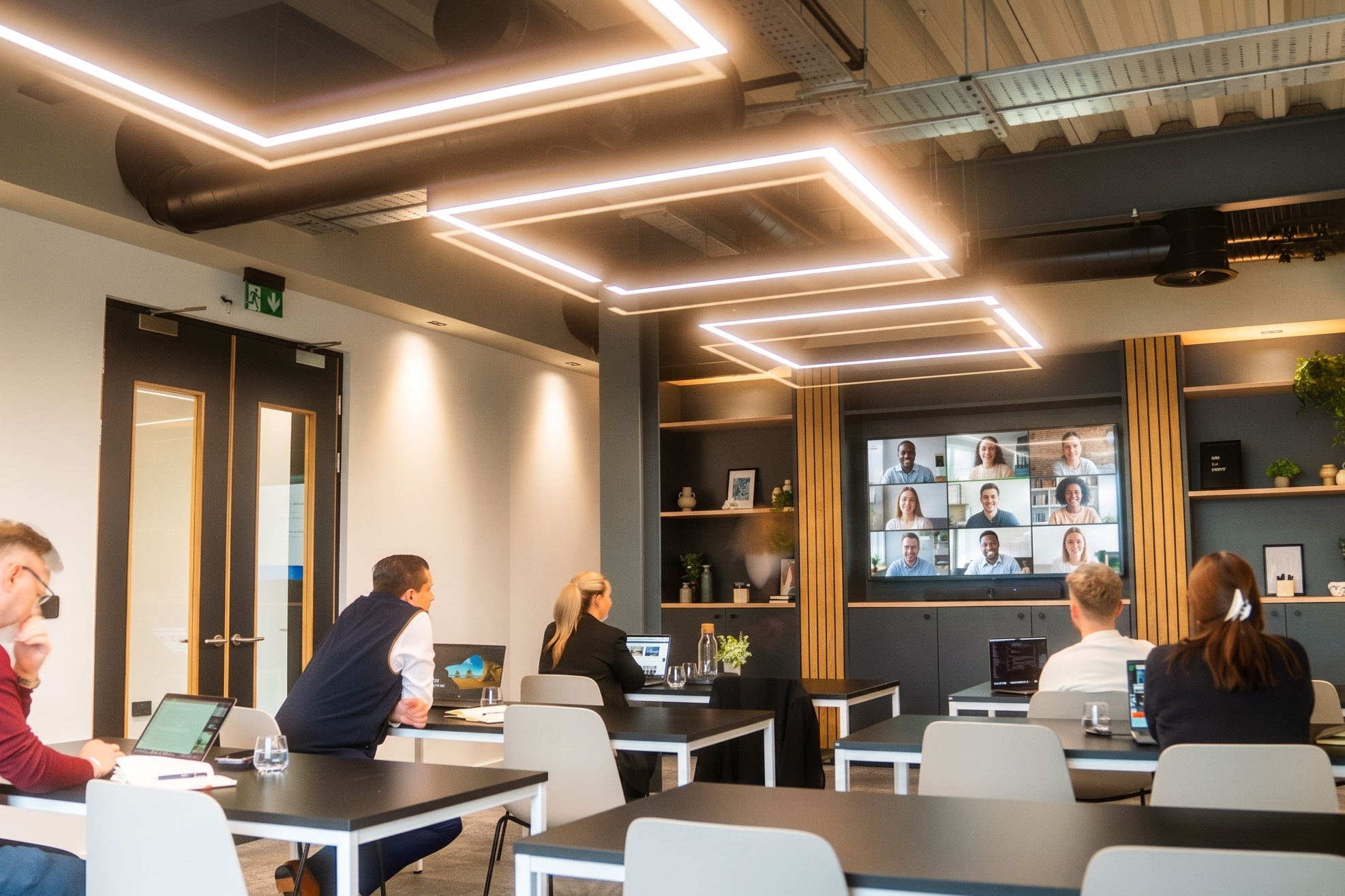
This matters because 65% of organisations now require employees to be in a workplace a minimum number of days per week or month, and 14% are planning to increase those mandatory days over the next year. At the same time, employees want flexibility and shorter commutes. A flexible workspace solves this tension by giving teams a professional environment to work from without forcing everyone into a single central office. We have explored how flexible workspaces are supporting UK business growth in more detail elsewhere if you want to read more on the wider commercial case.
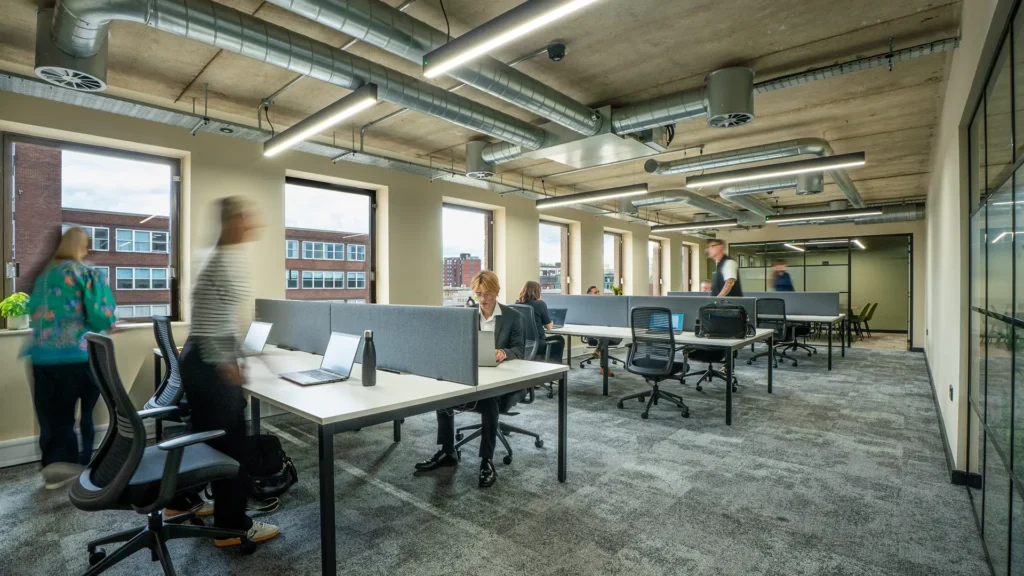
The geography point is just as important. Hybrid working lets you recruit from a much wider area, but that only works if your people have somewhere suitable to work locally. Asking a new hire in Bolton to commute into central Manchester three days a week defeats much of the purpose. Giving them access to a local flexible coworking space or a desk in a flexible office closer to home is what makes flexible working actually work in practice.
Here at Orbit, we have spent the last few years building a network of premium flexible workspaces across the North West for exactly this reason. Our sites in Manchester, Stockport, Bolton, Cheshire and Warrington give businesses and their teams somewhere professional, well equipped and accessible to work from, whether that is for a single day, a week or as a permanent base.
Putting flexible working into practice does not need to be complicated, but it does need to be thought through. The starting point is understanding the types of flexibility on the table so you can match the right option to each role.
Common types of flexible working include hybrid arrangements that split time between home and the workplace, flexi-time that lets staff choose their own start and finish times within agreed limits, compressed hours that pack a full week into four longer days, and job sharing where two people share one full-time role. Part-time hours, term-time working, staggered shifts and fully remote working are also widely used.
CIPD research shows the most popular types employees currently use are working from home (50%) and flexi-time (38%), while the four-day week is the most requested option that is not yet widely available.
Once you have a sense of what could work, the next step is to build a simple policy and stick to it. A practical checklist for getting started looks like this:
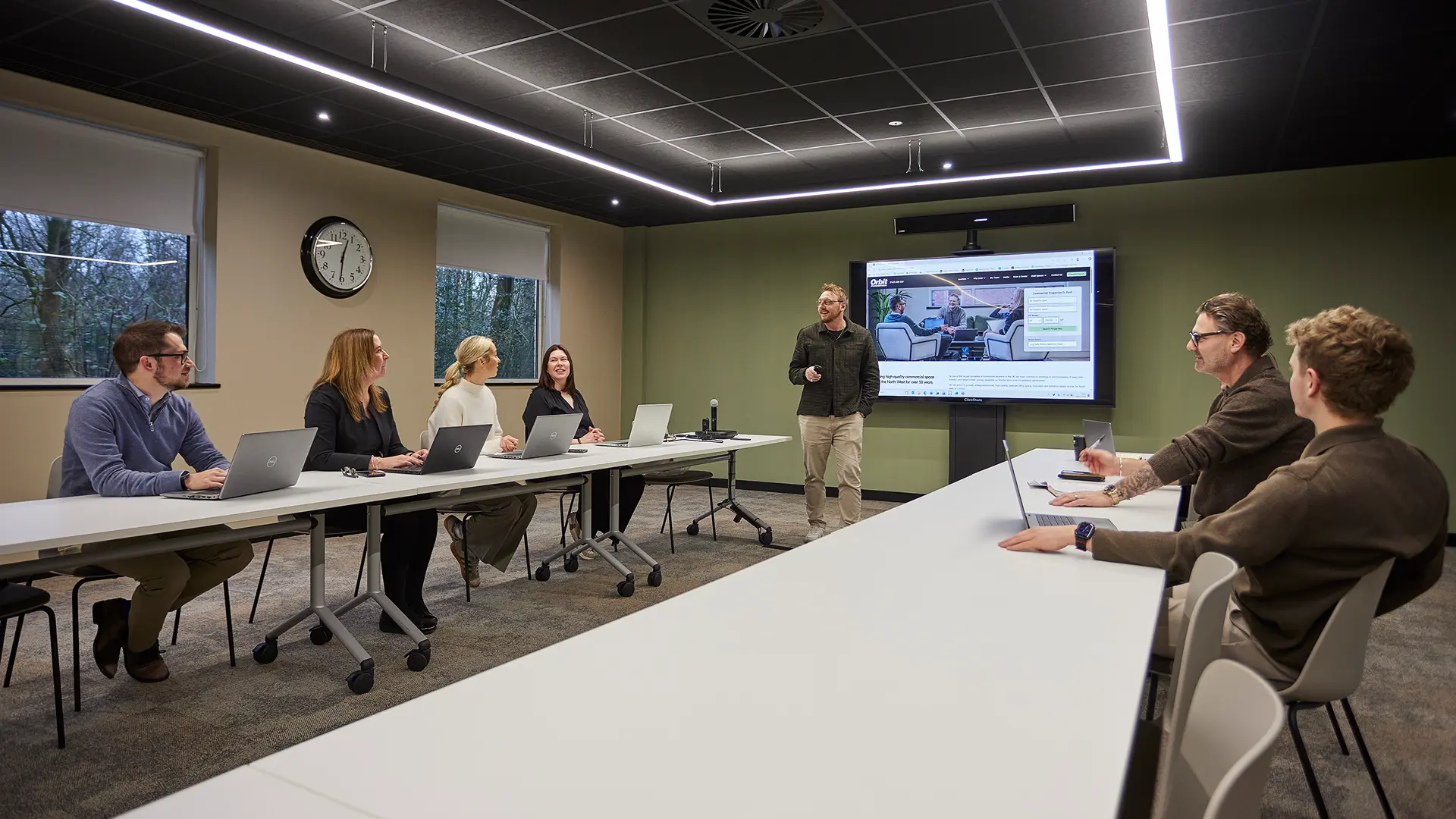
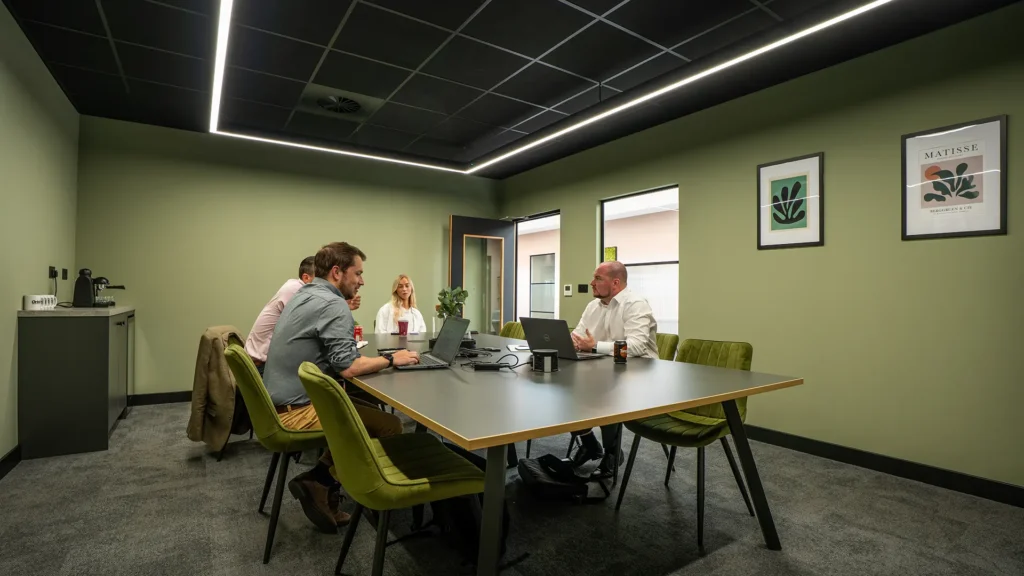
The “where” question deserves a place on that checklist too. Many businesses find that combining home working with access to a flexible meeting room for team days, or offering staff a coworking day pass to a local workspace, gives them the best of both worlds. For growing teams, a dedicated desk or small private office can be a much lower-commitment option than signing a multi-year lease on traditional premises.
Here at Orbit, we work with startups, freelancers and established businesses across the North West to design workspace solutions that match how their teams actually want to work. That might be a single day pass for a freelancer in Warrington, a private office for a growing team in Stockport, or meeting rooms in Manchester for client-facing sessions. The point is that the space should fit the working pattern, not the other way around.
Employees have the legal right to request flexible working from day one of a new job, following the Employment Relations (Flexible Working) Act 2023. Employers are not required to say yes to every request, but they must consider each one properly and respond within a set timeframe. Refusals can only be made on specific business grounds set out in the legislation.
The most common challenges are around team cohesion, manager confidence and consistency. CIPD research shows employers are most likely to report a negative impact on managers’ ability to lead teams effectively, employee connection to organisational purpose and workplace culture. These issues are usually solvable with the right training, clear communication and shared workspace time, rather than being inherent flaws in flexible working itself.
For most businesses, yes. 41% of employers report that home and hybrid working has increased productivity in their organisation, compared with 16% who say it has decreased. The outcome largely depends on how well it is implemented, including the tools, training and physical spaces provided to staff.
Hybrid working is one type of flexible working. It specifically refers to splitting working time between a workplace and another location, usually home. Flexible working is the broader term and includes hybrid plus other arrangements such as flexi-time, compressed hours, job sharing and part-time work.
Flexible working has moved from an employee request to a business essential. The data is clear that it improves wellbeing, widens your talent pool, helps with retention and supports productivity when set up properly. The businesses that will thrive over the next decade are the ones treating flexibility as a core part of how they operate, not an exception to it.
Here at Orbit, we help businesses across Manchester, Stockport, Bolton, Cheshire and Warrington put flexible working into practice with workspaces designed around how modern teams want to work. Whether you need a flexible coworking space, a private office, a meeting room or simply a day pass to try things out, our flexible workspaces give you the space, facilities and atmosphere to help your team stay focused, productive and connected.
Enquire about a workspace today to find the right fit for your team, or get in touch to learn more about how we can support your flexible working setup.